Ads used to be here |
 |
 |
 |
 |
 |
 |
 |
 |
|
An
Interview with
Arthur Dong (Forbidden City, USA) by Lia Chang |
|||
|
|||
|
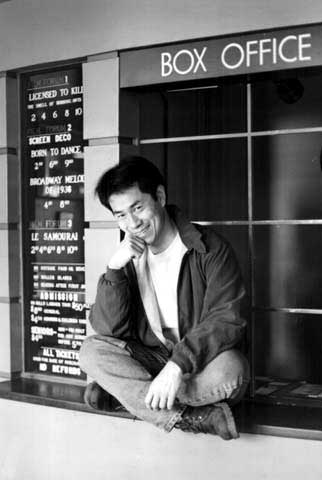
At a time when Asian directors are the flavor of the month on the international and Hollywood film circuits, Arthur Dong can look back over a career that spans more than three decades and over 100 film awards and fellowships.
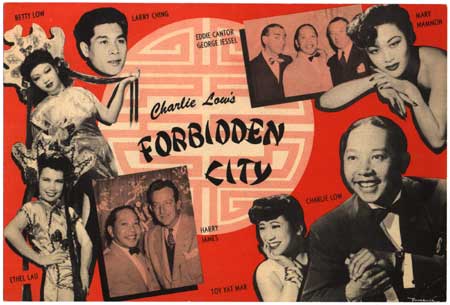
2002 has been a remarkable year for this prolific documentary filmmaker. Dong was elected to the Board of Governors of the Academy of Motion Pictures Arts and Sciences, representing the Documentary branch this year. His critically acclaimed Family Fundamentals is in selected theaters nationwide, and his Forbidden City U.S.A. documentary, originally produced in 1989, has just been released as a collector's edition DVD. Both documentaries focus on very different topics, but share a common theme. They are subjects that Dong is passionate about. Dong's Family Fundamentals, examines America's cultural wars over homosexuality as experienced by three fundamentalist families with gay adult children. In Forbidden City, U.S.A. Dong explores the history of the notorious and groundbreaking Chinese-American San Francisco nightclub and its performers, which had an international reputation in the 1930s-40s. In his bittersweet valentine to a generation of Asian American pioneers who fought cultural barriers to pursue their love for American song and dance, Dong captures the glamour and significance of the period. Dong has woven together interviews with Forbidden City alumni, rare color footage of the club, archival film clips from major Hollywood studios featuring Forbidden City stars, and photographs from personal collections of the performers to shine the spotlight on a rare page of American entertainment history. After Forbidden City, U.S.A.'s theatrical release in 1989, the film garnered more than 15 international film excellence awards, including Best Documentary of the Decade at the Hawai'i International Film Festival and was broadcast on PBS as part of the network's American Experience series. The Forbidden City, U.S.A. Collector's Edition DVD is a superb treat with additional interviews, a promotional film by nightclub owner Charlie Low and exceptional performance footage of the dancers and singers, including an "Oriental tribute to the gay '90s". Dong has dipped into his vast collection of memorabilia: a souvenir program booklet from the club, a gallery of promotional glamour portraits, postcards, menus as well as a few surprise hidden Easter Eggs like the "soundie" musical short "Wise Man Say" from this bygone era. Rodgers and Hammerstein's 1958 Broadway musical Flower Drum Song, and David Henry Hwang's new version currently at the Virginia Theatre in New York, are loosely based upon the Forbidden City nightclub and some of its performers, and its owner Charlie Low. When Gene Kelly was casting the Broadway production of Flower Drum Song, novelist C.Y. Lee suggested he check out the talent at the Forbidden City. Kelly quickly cast Forbidden City comedian Jack Suzuki aka Jack Soo, for the Broadway production. Flower Drum Song would launch the first generation of Asian American actors in Hollywood. Soo would go on to a career in Hollywood, and was a regular on TV's Barney Miller show.
Charlie Low's Forbidden City Nightclub gained an international reputation as the nation's premiere all-Chinese nightclub showcasing Chinese American performers in All-American production numbers soon after it opened in San Francisco on December 22nd in 1938. Forbidden City was frequently compared to the Cotton Club of Harlem, which featured America's finest black entertainers. Asian American singers and dancers strutted their stuff at the San Francisco Chinatown nightclub at 363 Sutter Street, and at similar "Chopsuey circuit" nightclubs from the 1930's through the 1950's. Larry Ching, the "Chinese Frank Sinatra", Toy Yat Mar, the "Chinese Sophie Tucker", Bubble dancer Noel Toy, the "Chinese Sally Rand" and the incomparable dance team of Toy and Wing, the "Chinese Fred Astaire and Ginger Rogers" were just a few of the top notch performers headlining at the club. Scions of high society, politicians and celebrities, as well as soldiers from across the country flocked to The Forbidden City Nightclub to check out the all-Chinese revues. In reality many performers were also Americans of Japanese, Korean and Filipino ancestry. Japanese American dancers Helen and Dorothy Takahashi used the stage name of Toy because It "fit better on the marquis" but other artists like Jack Soo who changed his name from Suzuki, did so because of the World War II internment of Japanese Americans on the West Coast. Discrimination against Asian American performers was rampant in the mainstream entertainment industry. Discouraged by their own families, young Asian American singers and dancers followed their passion and pursued their craft by working in cities across the U.S. on the Chop Suey nightclub circuit and doing U.S.O. shows around the globe for the troops from the late 30's through the 40's. Some even found success in Hollywood. The nightclub industry began to decline after the war ended and the novelty of the all-Asian revues wore off. Over a late night supper, Dong talked about his life in film, the little known history of Asian Americans on stage and on screen in the 30's and 40's, the making of Forbidden City, U.S.A., the new DVD release, and what motivated him to make his latest documentary, Family Fundamentals. Fresh from the West Coast screening by the Asian American Studies Department and the Cinema Department at San Francisco State University, Dong is in New York for the Museum of the Chinese in the America's screening of Forbidden City, U.S.A. at Hunter College and to see MoCA's new exhibit, "Gotta Sing, Gotta Dance! Chinese America in the Nightclub Era, " which will feature a special viewing station giving museum visitors a chance to preview the Collector's Edition DVD. Dong's fascination with films started in high school. As a teenager, he read books on the history of cinema with the idea of becoming a film historian. At the same time, the politics of San Francisco created unusual opportunities for this openly gay student amid the gangs and drugs at Galileo High School. In 1970 Dong made his first student film, based on a poem he had written which explored sexual mores and violence. The five-minute animated film, Public, ended up winning first prize at the California High School Film Festival. After graduating from Galileo, he headed off to San Francisco State to study filmmaking, but once there he realized he was not quite ready to take on the role of student. "Film could be a valuable medium to discuss social issues, to make social change possible," he said. "Films get shown to thousands and thousands of people if you are lucky, if it captures the imagination of a viewing audience. I felt that it was too much responsibility to handle this medium. I dropped out of college and worked a number of different types of jobs." In 1979 on a trip to China, Dong brought along a camera and began shooting home movies of his travels. He started editing the film in his head on his 18-hour flight back to the United States, picturing the footage he had shot without having seen it. He knew it was time to go back to film school, and returned to S.F. State, graduating Summa Cum Laude in 1982. He later attended the American Film Institute's Center for Advanced Film and Television Studies. The rest is history. The shortlist of his filmography includes Out Rage '69, an exploration of the birth of the radical gay liberation movement beginning with the Stonewall Riots in New York; the double Sundance award-winning Licensed to Kill, a brutal look into the minds of murders who killed gay men, the Peabody award-winning Coming Out Under Fire, which chronicles the lives of nine gay and lesbian soldiers during World War II when the military established its first explicit anti-gay policies, the Oscar nominated Sewing Woman, about his mother's immigration from China to America, and Lotus, a half-hour drama on foot-binding. Lia: What inspired you to make Forbidden City, U.S.A.? Arthur: I'm a lover of Hollywood movie musicals from the Golden Era. I've always been thrilled by that period of time when there was a certain kind of movie magic, a certain kind of makeup, costuming, and songs. But these movies were always cast with white folks, or blacks, but not Asians. But then I discovered, "Wait a minute. We were there!" It was two fold: my love for the movie musical genre and my interest in Asian American history that really made me stick with this project so long. As a kid, I explored San Francisco on my own, and back then it was safe, you could walk around town as a kid unescorted. I remember discovering Forbidden City. In the early 60s it was a strip joint but they still kept pictures of the old performers from the 40s in the marquis and in the window cases. I would stop and stare. But I grew up and had forgotten about these images until I read an article about Jadin Wong, a manager of Asian American talent in New York. I looked up my old pal Kevin Gee who I hadn't seen in a couple of years because he had moved out to New York to pursue a career in the theater. I called and asked if I could stay with him, and as luck would have it, Kevin happened to be the stepson of Charlie Low, the owner of Forbidden City. I never knew this, and if I did, I probably just filed it away in a back compartment of my memory banks. So it was as though this project was meant to be.
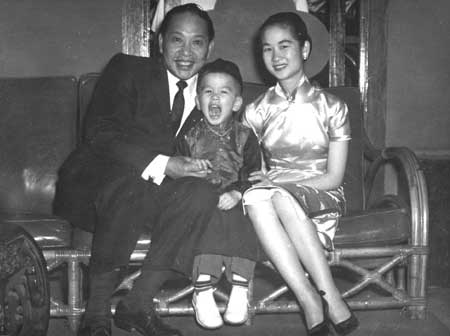
I ended up staying in New York probably a week or so in 1985 and not only discovered this history and spent time with Jadin, but also renewed my friendship with Kevin. He was excited about my doing a film about Forbidden City because he grew up there. Kevin introduced me to Charlie, which was important because that connection established a level of trust instantly. And all the old entertainers remembered Kevin as "Mo-Mo," they used that nickname at the club. So when I called other performers, I would say, "I'm a friend of Mo-Mo's." And they'd ask about him like a long-lost relative. It was like planning a family reunion. With Jadin, I didn't realize that she was a dancer at Forbidden City until I came to New York and she started talking about the club. And I thought, "Oh yes, I remember that club." And all the memories that I had filed in the back of my mind when I was a kid and walking by the club came right back. She was invaluable. What was really great was that her family in Stockton kept scrapbooks on her. Jadin never did because she was always traveling, but her family kept every little bit. And she had so much material to draw upon. From her I started to branch out to the other performers along with the contacts that Kevin provided. Lia: What are some of the special extras that you were able to include on the DVD? Arthur: I interviewed Kevin's mother Ivy Tam, Mrs. Charlie Low #4, she's in the DVD. I interviewed two other people that I wasn't able to include in the film because of structure and other story choices. But I was able to put them in the DVD and its great. I have pictures of Kevin as a child with Charlie and his mom back in Forbidden City. The interviews of Ivy, dancer Jade Ling and Walton Biggerstaff (an early producer and choreographer), just excerpts, they're all on the DVD and it's really gratifying to be able to show them after all these years. There's also a section on some of the stars who went on to Hollywood: James Hong, Sammy Tong, Jack Soo and Robert Ito, they performed at Forbidden City too. I wasn't able to cover that legacy in the film -- it didn't quite fit in, but on the DVD in a section called "Potpourri," I include their pictures to show their contributions as part of the history of Forbidden City. What I wanted to do was say that it just didn't stop at the club -- that for some entertainers this was a jumping board. Lia: How did you finally get the DVD of Forbidden City, U.S.A. made? Arthur: I've been trying to renew the music rights for Forbidden City, U.S.A since 1997. It's crazy but I signed my last music license contract just two months ago with EMI. It took that long. It's not unusual really for an independent documentary to go through these hoops -- I had to make sure I could afford it. What a relief. But I am really happy with the DVD -- now we can get it out there. When I finished Forbidden City, U.S.A. in 1989, I wanted to produce a book because I had so much material, not only the pictures and visuals but also the oral histories that I taped both on audiotape and on film. And they were all transcribed and tell some really wonderful stories from a particular time in history. I'm not a book writer; I don't know the world of publishing so I wasn't able to get the project off the ground. So my entire collection was put into boxes. I think the wait was worth it because Forbidden City, U.S.A. has always been a multi-media project--a visual and audio experience-- a journey down memory lane by looking at pictures, hearing the sounds, and watching motion picture clips, and the DVD format is perfect for that type of interactive presentation. In some ways it's probably better that I waited this long to continue what I started 13 years ago. The technology for DVDs has exploded since then and really allowed me to expand on the project even further than I ever thought possible. I've collected a treasure trove of archival material -- I spent some 5 years researching this topic and that research never stopped just because the film got completed. People still came up to me and showed me their collections, offered me memorabilia. I just wanted to be able to bring it all out to the public. It's stuff that you just don't see everyday. Lia: Let's switch gears. What compelled you to make Family Fundamentals? Arthur: Family Fundamentals was motivated by a desire to address the deep divide between the gay community and conservative religious rights groups by focusing on the universal theme of family. I studied religion and gained more knowledge and respect about a topic I knew very little about. I needed that understanding in order for me to critique it. I needed to understand it so that I can explore the minds and forces that I feel are oppressing my people. I didn't purposely structure it so but Family Fundamentals is the third of a trilogy of films that deal with anti-gay-oppression, Coming Out Under Fire and Licensed to Kill, and now this. They're not celebratory films. They're hard hitting and they challenge and they don't offer easy answers and solutions to highly complex problems. They're not necessarily inspirational either -- although I believe they are on a certain level because they inspire audiences to fight harder for social justice. And they are very emotionally draining. And to be with them, it continues that emotional drain because I deal with these issues with audiences. Lia: Since you are also an independent producer, what has your schedule been like in terms of marketing the film and the DVD? Arthur: Since Family Fundamentals premiered at Sundance in January, I've been traveling around the country with it -- I'm still traveling with it and I have engagements up until next spring. Then there'll be yet another round of promotions when it's broadcast on PBS. We just had a big push in October when we opened in 4 cities and that was physically draining as well. And all the while I've also been simultaneously working on the Forbidden City, U.S.A. DVD, which is way over on the other end of the emotional spectrum. It would keep me happy. I'd call up performers to ask for more photos (For example, Larry Long, Jodi Long's father, I didn't have a picture of him and Frances Chun had one of him with Paul Wing -- they were the Wing Brothers.) I started talking with these folks again and it is so much fun as opposed to talking to a Pentecostal Church leader (profiled in Family Fundamentals) who thinks that I'm an immoral sexual deviant. I'm now traveling with Forbidden City, U.S.A. on a limited basis and these trips are easier because I know I'm going to have a rollicking good time and not entrenched in a serious discussion about homophobia. I think it's critical though that I continue to work in that area: Family Fundamentals addresses the ongoing debates over the separation of church and state; Licensed to Kill examined anti-gay violence right before Matthew Shepard's murder; and Coming Out Under Fire provided historical context to the 'Don't Ask, Don't Tell' controversy. These are all stories that I'm passionate about. What I love about film is that there's no limit. There's an infinite amount of stories out there to tell and to explore. I don't make a film every year and I'm very careful about what I choose because I know once I choose a topic, I'm going to stick with it a long time and live with it beyond the making of the actual film. Just like with Forbidden City, U.S.A. I finished that film in 1989 and now 13 years later, it's even more exciting than it was then to work on it. I've been able to take it up a notch. Arthur Dong is a true visionary. Committed to addressing social issues through his work, filmmaker Dong's storytelling is rich, insightful and always thought provoking. Dong has another hit on his hands with the compelling Family Fundamentals, the third in his trilogy of films dealing with anti-gay oppression. And with the release of the delightful Forbidden City, U.S.A., as a collector's edition DVD, new audiences can own this jewel of a documentary and discover the rich legacy of Asian Americans who broke the mold and against all odds embraced their passion for singing and dancing in the 30's and 40's paving the way for the Asian American artists of today. For more information on the DVD Collector's Edition of "Forbidden City, U.S.A.," visit the DVD information page at deepfocusproductions.com. |
|||
|
|



 AsianConnections Arts & Entertainment Editor Lia Chang (left) currently appears as Nurse Chang on As The World Turns and One Life to Live. She is an accomplished stage, screen and TV actress, photographer and writer based in New York City. AsianConnections wishes to thank Lia and Arthur for their
generous time and efforts in making this interview possible.
AsianConnections Arts & Entertainment Editor Lia Chang (left) currently appears as Nurse Chang on As The World Turns and One Life to Live. She is an accomplished stage, screen and TV actress, photographer and writer based in New York City. AsianConnections wishes to thank Lia and Arthur for their
generous time and efforts in making this interview possible.
 |
|||
|
 |
|
|
| | About Us | Disclaimers and Legal Information | Advertise With Us | We welcome your comments. Send e-mail to us at info@asianconnections.com Copyright ©1999-2002 AsianConnections.com |